

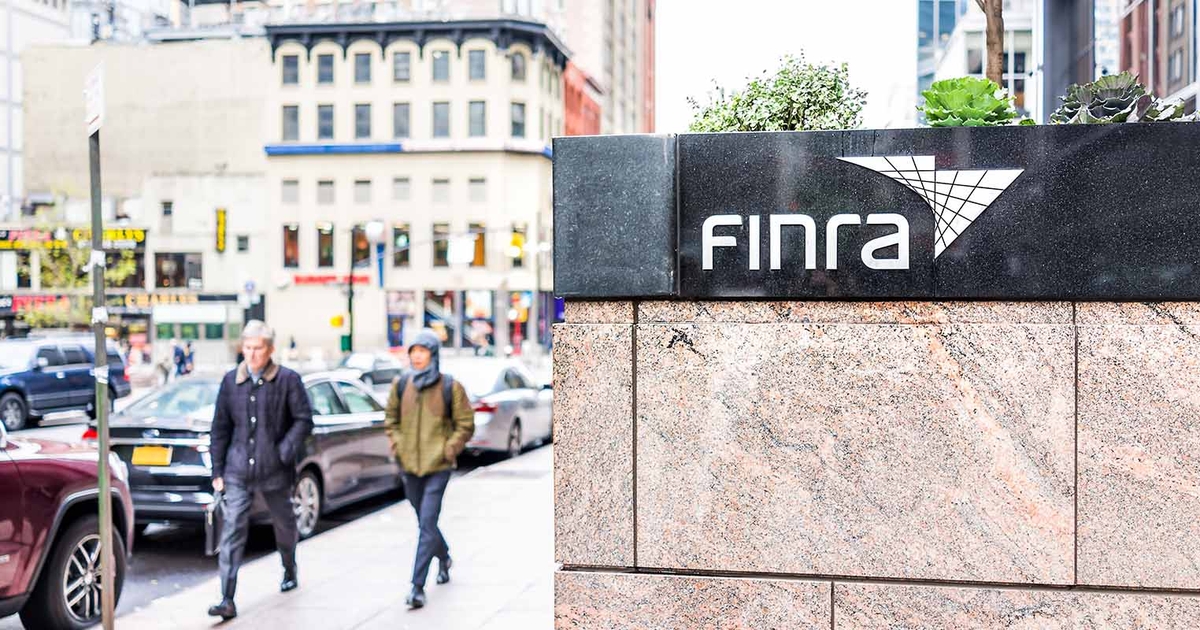
The Home Subcommittee on Capital Markets of the Committee on Monetary Companies held a listening to on Thursday to debate the function of self-regulatory organizations in U.S. markets, together with the Monetary Trade Regulatory Authority and the Municipal Securities Rulemaking Board. Legal professionals and different {industry} stakeholders testified on the listening to, with some calling for important modifications at FINRA and elevated oversight by the Securities and Change Fee.
The listening to comes because the Home Committee on Monetary Companies considers the Restoring Accountability in Market Supervision Act, launched by U.S. Rep. Lisa McClain (R-Mich.) final April. The invoice would switch rulemaking, examination and enforcement authority from FINRA to the SEC.
Jennifer Shaw, govt director of the Public Traders Advocate Bar Affiliation, testified, arguing for an pressing want for enhancements at FINRA. She referred to as out the regulator’s FINRA Ahead initiative, its rule modernization initiative, “which PIABA believes strikes investor safety backwards to a time lengthy earlier than the 2008 monetary disaster.”
“From PIABA’s perspective, not solely does it seem that FINRA is weakening the safety for buyers on the entrance finish, it’s now making an attempt to stack the deck towards buyers and retirees who try to carry their brokers accountable for his or her dangerous or fraudulent recommendation,” she mentioned. “When buyers join investor retirement financial savings with a monetary advisor, they’re pressured into FINRA’s industry-run non-public justice system. Because the monetary disaster, FINRA has taken some small steps to make this industry-run discussion board extra truthful for buyers who’ve been defrauded. Nevertheless, with its latest motion, simply Monday of this week, FINRA introduced its intention to think about a rollback of investor protections to the Eighties to a time earlier than the monetary disaster, the dotcom bust, and even Black Monday.”
This week, FINRA put out a regulatory discoversearching for touch upon modernizing its arbitration guidelines and processes. Shaw argued that modernization would make it simpler for FINRA to dismiss arbitration circumstances earlier than hearings and alter who decides them.
PIABA didn’t go so far as calling for FINRA to be folded into the SEC, though the subject was introduced up throughout the listening to.
U.S. Rep. Brad Sherman (D-Calif.) mentioned he was agnostic on whether or not the SRO ought to be folded into the SEC, however urged that if FINRA stays unbiased, the board members may very well be chosen by the SEC.
“That’s the one approach that we are going to get equity inside FINRA,” Shaw mentioned in response. “It has been proven that even its public members aren’t actually public. They’ve an curiosity within the {industry}, and I believe that this ought to be one thing that’s thought of by this committee.”
Sherman additionally mentioned that if the SEC swallows FINRA or MSRB, it also needs to take within the income sources of these organizations.
“Is there anyone right here who thinks that the sum of money that we spend finishing up the capabilities of those two organizations is extreme and that we may do it with much less employees? Increase your hand if we should always minimize the employees doing the roles of FINRA. No fingers went up, and my time’s up,” he mentioned.
Rep. McClain, who launched the invoice for dialogue, additionally introduced up the problem, arguing that FINRA has grown far past its unique function.
“At this time, FINRA employees, not {industry} members, writes binding guidelines, investigates folks, brings enforcement circumstances, holds hearings, points massive fines and may completely finish somebody’s profession,” she mentioned. “But, FINRA just isn’t topic to the identical transparency legal guidelines as federal businesses. Its conferences aren’t absolutely open. Its data aren’t absolutely public.
“Now, if a company workouts government-level energy, it ought to have government-level accountability. So, it’s time to ask whether or not these powers ought to sit straight below the SEC, the place oversight, transparency and accountability to the American individuals are clear.”
She additionally famous that FINRA CEO Robert Prepare dinner earned $3.6 million final 12 months.
Onnig Dombalagian, a professor of legislation at Tulane College College of Legislation, responded, “After we say the FINRA is a quasi-governmental company, are we saying that they’ve the ability, once more, to have the ability to put folks in jail? No.”
McClain shot again, saying FINRA does have the ability to gather and levy fines. Dombalagian agreed along with her, however argued that it’s just for people within the securities {industry}.
“If it appears like a duck and it acts like a duck and it quacks like a duck, it’s in all probability a duck,” McClain mentioned.
One other consultant requested Dombalagian whether or not FINRA was kind of accountable to the general public than the SEC.
“I might say that FINRA doesn’t take your life, liberty and property,” he responded. “All FINRA does is revoke your license to take part within the securities {industry}. That may have devastating penalties for folks whose livelihood is determined by it, however FINRA just isn’t in that sense accountable to the general public in the best way that the SEC is, which does have these powers and different governmental our bodies that do have these powers.”
He added that there’s an accountability course of in place, together with the regulatory discover and remark course of and guidelines for the evaluate of disciplinary choices.

