

For monetary advisors certain by a fiduciary obligation, appearing within the consumer’s greatest curiosity goes past avoiding conflicts of curiosity: it additionally requires an obligation of care. This implies prudently evaluating whether or not an funding is appropriate and absolutely understanding what’s being beneficial. It follows that the extra advanced or opaque an funding is, the extra due diligence work is required to have a “cheap foundation” to consider a suggestion is within the consumer’s greatest curiosity. As different investments have change into extra accessible to retail buyers – and extra aggressively marketed to monetary advisors – reducing by means of the advertising noise to judge every potential funding by itself deserves has additionally change into harder.
The SEC has made clear that fulfilling the obligation of care requires a documented due diligence course of. In a 2023 Workers Bulletin, the SEC outlined important issues for evaluating an funding’s appropriateness, together with its goals, value construction, danger profile, liquidity, tax implications, and portfolio position. Nevertheless, there is no such thing as a one cookie-cutter course of; the extent of scrutiny an advisor applies should scale with the funding’s complexity. Publicly obtainable analysis instruments (e.g., Morningstar) might suffice for evaluating easy merchandise like index ETFs. However as advisors transfer up the complexity curve to different investments like choices methods, hedge funds, or personal fairness, the due diligence bar rises dramatically. Advisors should go deeper, not solely in understanding the mechanics of a product, but additionally in stress-testing assumptions, vetting administration, and evaluating operational integrity.
Personal fund investments, akin to personal fairness and personal credit score, current distinctive challenges. Know-how platforms like CAIS and iCapital have lowered boundaries to entry, and fund managers are tapping new swimming pools of capital, leaving advisors flooded with alternatives to entry merchandise that have been historically unique to institutional and high-net-worth buyers. Nevertheless, there is a essential distinction between entry and appropriateness. In contrast to public markets, there is no index for personal funds: every is actively managed, typically opaque, and extremely variable in efficiency. Choosing the unsuitable fund may lock up consumer capital in a poorly managed and even fraudulent funding with restricted recourse – as much as and together with whole loss. Advisors should due to this fact assess not solely whether or not personal investments make sense on the class degree (given their illiquidity and draw back danger), but additionally whether or not particular person managers have credible methods, sound operations, and charge buildings that do not unduly erode returns.
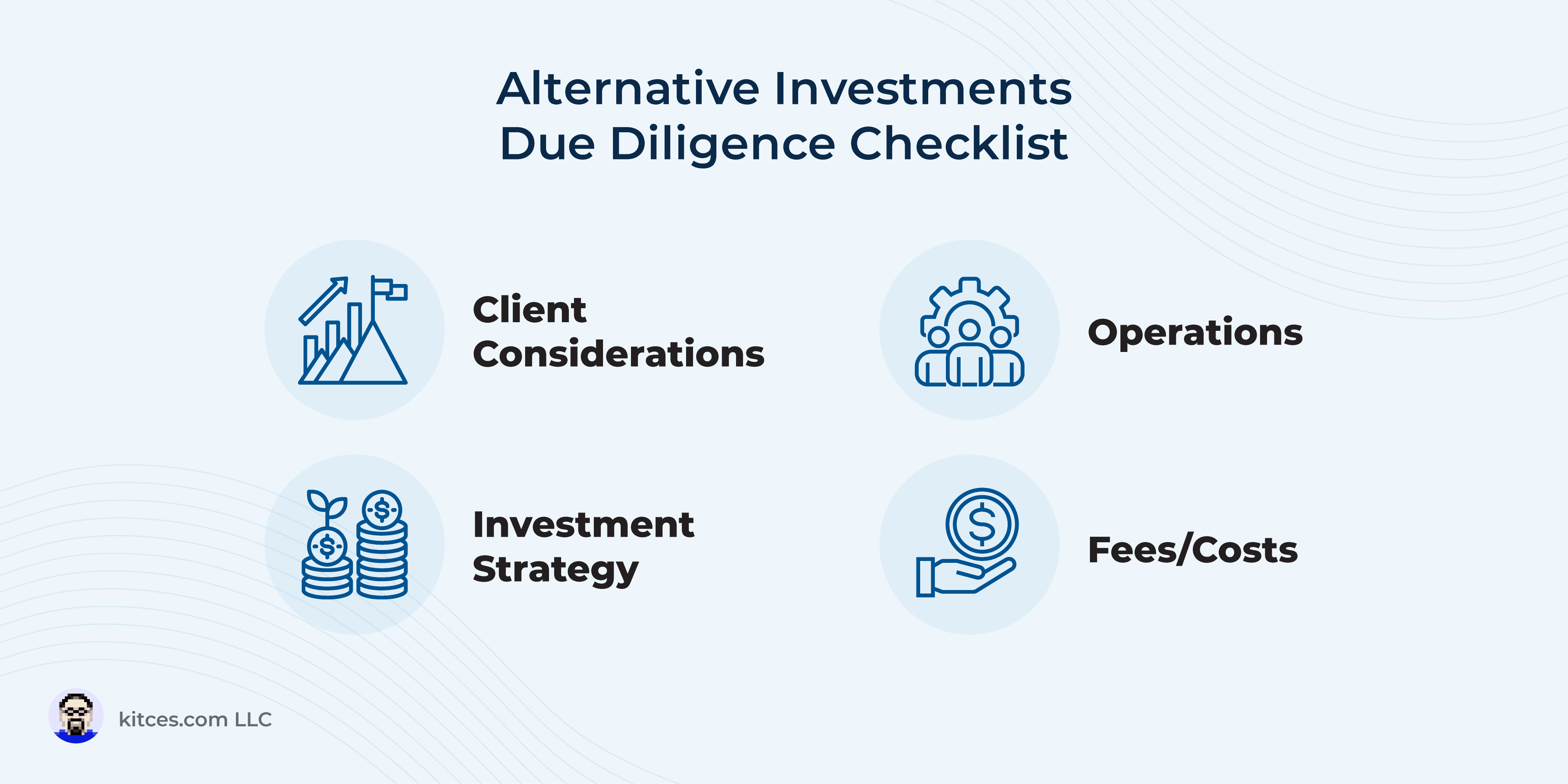
Efficient due diligence on personal funds due to this fact requires a multi-layered evaluation. On the consumer degree, advisors should consider danger tolerance, liquidity wants, and whether or not less complicated public-market options may meet the identical targets. On the supervisor degree, advisors should consider funding technique, operational controls, and prices. Moreover, going past a fund’s advertising supplies is important to confirm its said funding technique and adherence to it, guarantee third-party oversight exists for fund accounting and audits, and analyze its charges and prices (together with its provisions round leverage, incentive hurdles, and ‘catch-up’ provisions). As illustrated in a 2014 SEC Threat Alert, helpful due diligence practices embrace demanding position-level transparency, conducting background checks, and even vetoing investments based mostly on operational purple flags.
The important thing level is that almost all different property have been traditionally restricted to institutional buyers presumed to have the assets to judge advanced and dangerous investments – and when advisors recommending alternate options, they assume that evaluative duty. Outsourcing elements of the due diligence course of to third-party suppliers like outsourced CIOs will help, however the fiduciary duty stays with the advisor. Finally, due diligence – whether or not outsourced or inner – should be thorough sufficient to fairly justify {that a} given funding is within the consumer’s greatest curiosity, defending purchasers from unsuitable or harmful investments and reinforcing the advisor’s position as a prudent steward by means of considerate, well-informed suggestions.
Learn Extra…

