

Earlier than the SECURE Act was handed in 2019, non-spouse heirs who inherited IRAs may ‘stretch’ Required Minimal Distributions (RMDs) over their very own single life expectancy, typically permitting inherited accounts to final for many years. The SECURE Act changed that therapy with a 10-12 months Rule for many non-spouse beneficiaries, who should now absolutely deplete their inherited accounts inside 10 years, usually a lot prior to beneath the stretch guidelines would have allowed. But, in rewriting the regulation, Congress left one class of beneficiaries unchanged: Non-Designated Beneficiaries (NDBs).
On this visitor submit, Brad Herdt, a monetary planner at Deseret Mutual Profit Directors, introduces a method that enables monetary planning purchasers to doubtlessly stretch distributions for heirs past ten years – by deliberately utilizing NDB therapy.
For NDBs, the utmost account lifetime is both 5 years if the account proprietor died earlier than their Required Starting Date (RBD) – the purpose when RMDs should start – or the decedent’s remaining single life expectancy (decreased by one annually and rounded up) if the account proprietor died on or after their RBD. Which signifies that after the proprietor’s RBD, an NDB might doubtlessly be allowed to deplete the account over an extended interval based mostly on when the proprietor dies – in contrast to Non-Eligible Designated Beneficiaries (NEDBs), who face a set 10-year window to empty the inherited account.
Importantly, as soon as the proprietor survives previous their RBD, the distribution schedules for NDBs is tied to the proprietor’s remaining life expectancy – which, within the early post-RBD years, can exceed the 10-year rule by as a lot as 5 years. At that time, intentionally naming particular beneficiary designations, sure forms of trusts, and even the proprietor’s property (all of which might make the inheritor an ‘Intentional’ NDB, or INDB) can stretch the payout interval nicely past what an NEDB would obtain. Nonetheless, because the proprietor ages and their remaining life expectancy shortens, NDB therapy ultimately ends in a shorter payout interval than the 10-12 months Rule – making it advantageous to revert again to a person (i.e., NEDB) designation.
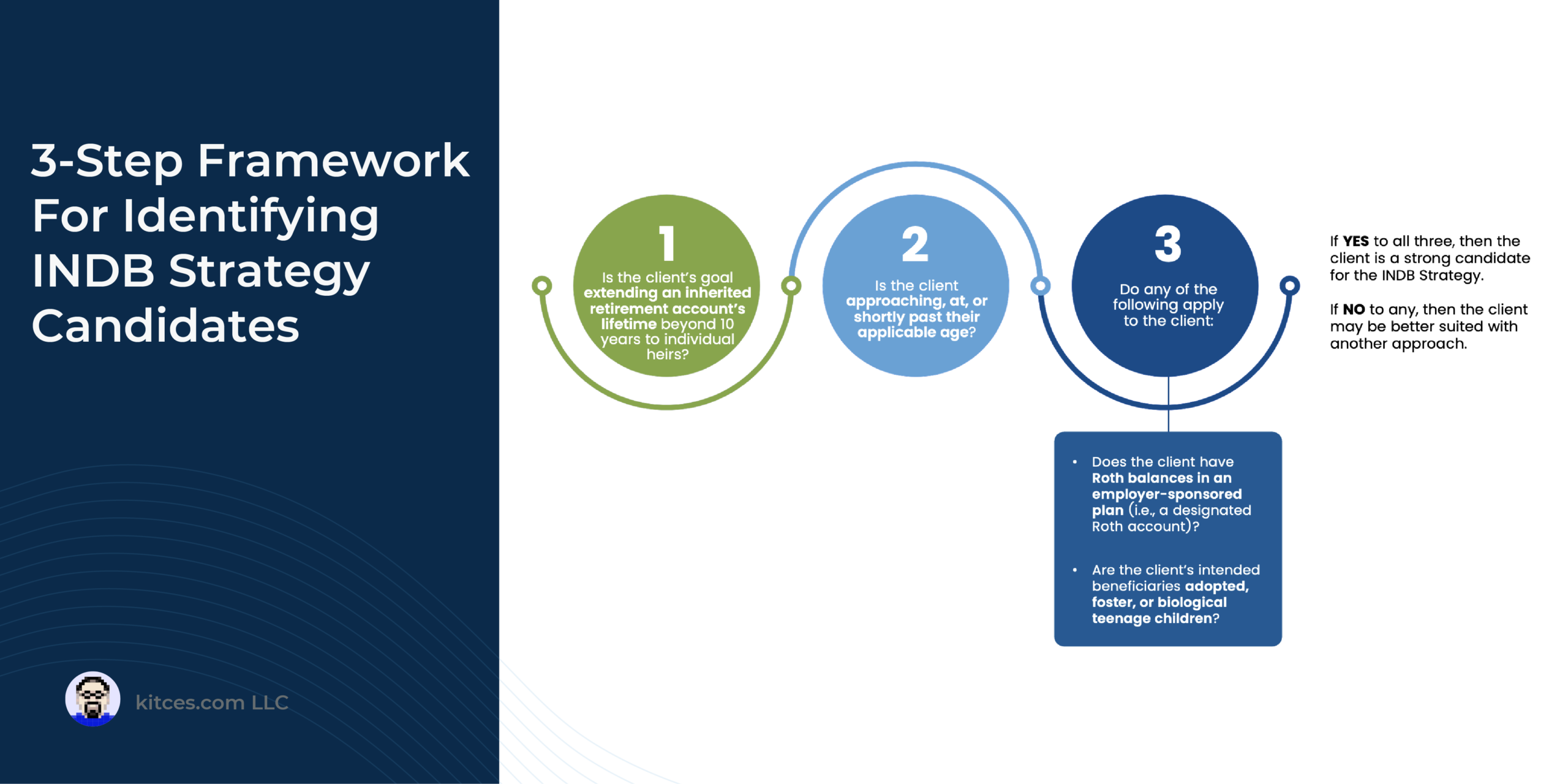
Even beneath ideally suited circumstances, although, an INDB’s annual RMDs for the primary 9 years will all the time be bigger than beneath NEDB guidelines – front-loading taxable revenue. Which suggests {that a} cost-benefit evaluation based mostly on every shopper’s distinctive circumstances (e.g., the supposed beneficiaries’ tax outlook and distribution habits, account-specific elements like Roth earnings maturity and sequence-of-returns threat, and the shopper’s personal preferences) is crucial. Nonetheless, for the suitable purchasers – resembling these with heirs who can take in larger early conventional account withdrawals, or these with sure Roth employer plans – the good thing about stretching distributions past ten years can outweigh the price.
In the end, the important thing level is that the INDB Technique can doubtlessly prolong the distribution interval by as much as 50%, giving heirs extra time and adaptability in managing money circulation and taxes. And since the technique’s success is dependent upon understanding the IRS timing and rule constraints, monetary advisors can play a crucial function in each figuring out when it is acceptable and serving to purchasers implement it successfully!
Learn Extra…

