

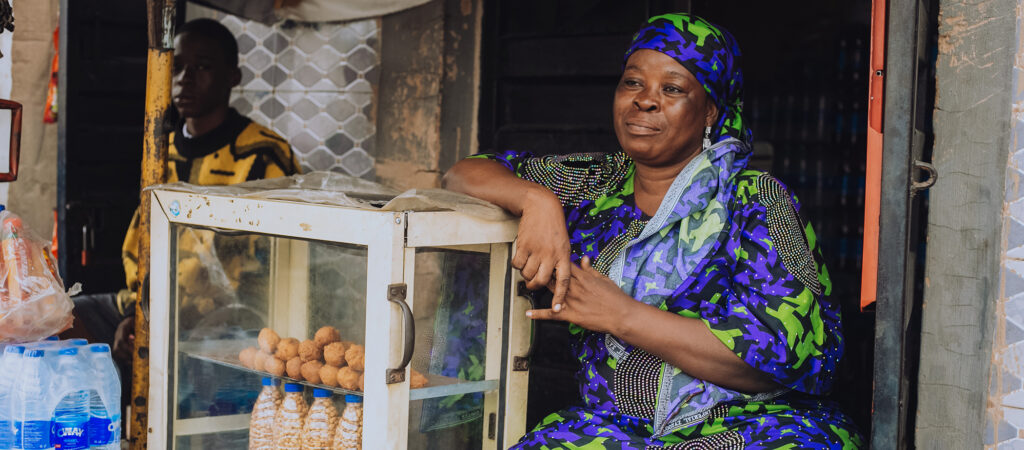
Beneath Nigeria’s vibrant marketplaces, ladies micro-entrepreneurs navigate a fancy monetary panorama. 70% of buying and selling in Nigerian markets is carried out by ladies (IFC), however regardless of their important financial contributions, these ladies stay underappreciated, usually missed by monetary establishments—at their very own threat.
In 2022, Ladies’s World Banking collaborated with three Nigerian banks to launch a financial savings product with elective credit score for low-income ladies. One financial institution targeted on encouraging ladies to avoid wasting small quantities over three or six months, providing credit score assist afterward. All through the initiative, the plain financial energy of those ladies got here to the forefront. Nigeria’s casual financial system is a powerhouse that accounts for an estimated 58% of GDP (IMF), and Nigeria’s GDP may enhance by USD 229 billion if ladies have been in a position to take part within the financial system at a stage commensurate of males.
By means of surveys and interviews throughout Nigeria’s 5 geopolitical zones, Ladies’s World Banking gathered precious insights for monetary companies suppliers to raised handle the wants of those ladies and promote monetary inclusion.
Our evaluation offers a nuanced understanding of the realities and challenges they face, and highlights a number of key insights:
Nigerian ladies micro-entrepreneurs face boundaries to monetary companies entry and utilization: These embody excessive prices, aggressive assortment strategies, technical difficulties, cultural and non secular constraints, lack of product consciousness, complexity of mortgage functions, and concern of stigma related to defaults.
Ladies who entry monetary merchandise attest to their influence: Financial savings accounts are valued for his or her safety, loans facilitate enterprise enlargement, and digital options enhance accessibility. Nonetheless, challenges embody various ranges of enthusiasm and gaps in buyer assist.
Monetary practices differ by geography: Financial savings are frequent in Nigeria, though habits differ by area. For instance, ladies in Lagos are frequent savers, whereas budgeting is fashionable in Enugu.
Ladies use a range of coping mechanisms to handle shocks: These embody private financial savings, casual loans, and digital monetary instruments. Nonetheless, higher assist is required to offset monetary challenges.
Ladies prioritize financial savings and monetary administration: Each day financial savings, group assist, and cautious mortgage borrowing are frequent, however regional variations exist in monetary schooling, engagement, and administration.
For a spread of causes, ladies want casual monetary merchandise: Group financial savings teams (esusu) and thrift financial savings are perceived to supply extra reliability, flexibility, alignment with values, and assist than formal monetary companies equivalent to financial savings accounts and loans.
These findings spotlight the need of addressing the particular wants and challenges confronted by ladies micro-entrepreneurs. Tailoring monetary companies to their wants, enhancing monetary schooling, enhancing accessibility, and respecting cultural and non secular values are important steps towards empowering these entrepreneurs and supporting their monetary stability and enterprise progress.

