

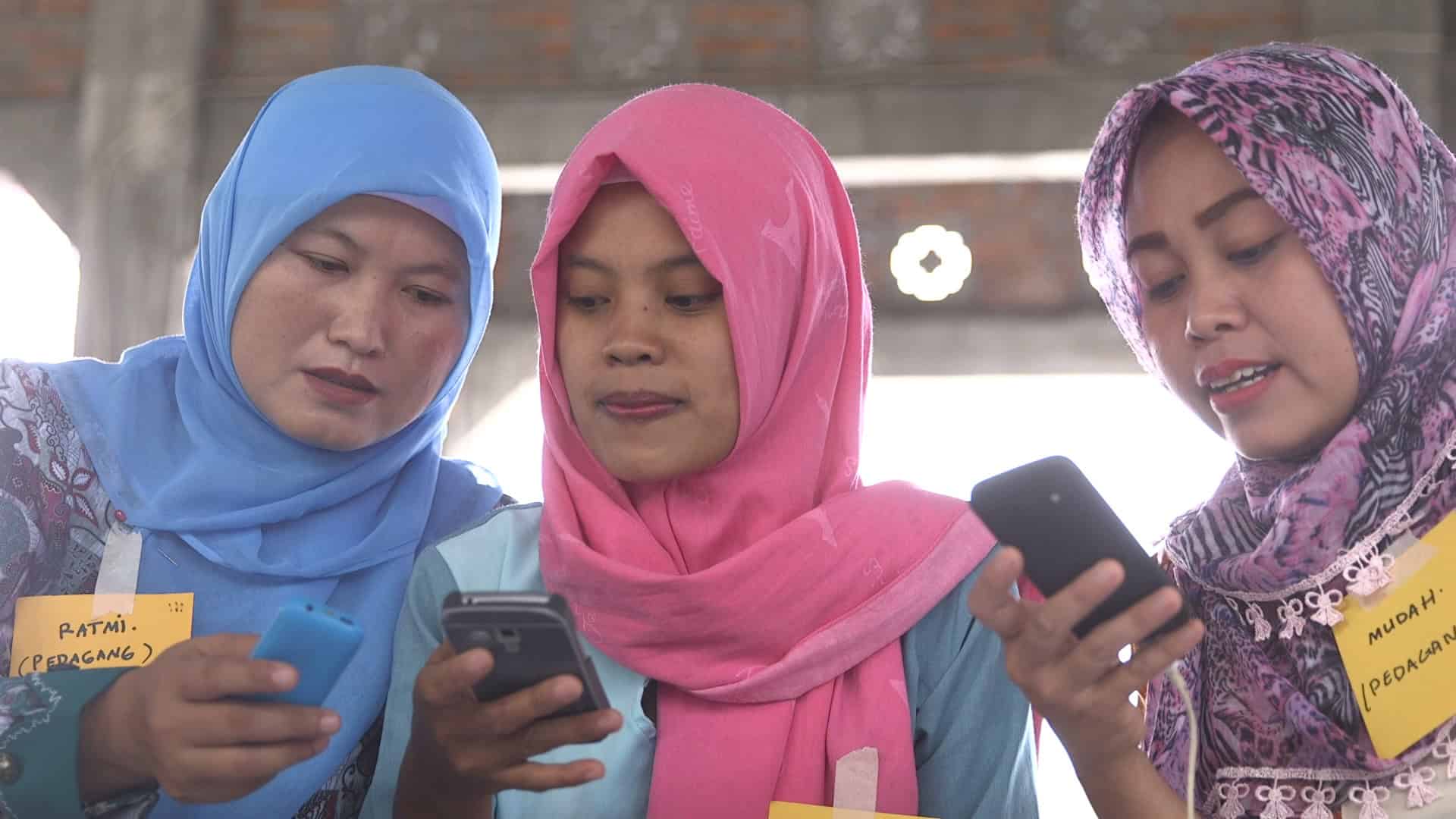
It’s a frequent sentiment amongst monetary establishments that goes one thing like: “We’d like to serve low-income ladies, however it’s simply too expensive.” This assumption that catering to ladies prospects inherently undermines profitability has lingered for years. However is it actually true?
We explored this in our analysis and located that practically two-thirds of monetary providers suppliers (FSPs) who participated in our survey disagreed that providing merchandise to low-income prospects at scale is “too costly”. But, regardless of this shifting notion, many establishments nonetheless battle to construct a enterprise case for women-centric merchandise. However why the disconnect?
The reply lies in product design obstacles, the place inner blind spots and biases can improve prices. On this weblog submit, we unpack these product design obstacles by the “value delusion,” exploring how a scarcity of gender knowledge and perception feeds the notion that serving ladies isn’t viable, and the way that delusion, in flip, results in suboptimal product designs that preserve prices excessive and uptake low. The reality we discovered is that girls could be a worthwhile market–if merchandise are designed proper.
Let’s break down why the “too costly” narrative persists and flip it round.
The “value delusion” and gaps in gender knowledge
Anybody who’s labored within the monetary inclusion house has heard this argument: “small steadiness accounts and micro-loans don’t repay.” Traditionally, ladies have been thought of prospects with low revenue margins who transact in tiny quantities, drive up service prices, and contribute little to the underside line. However our analysis uncovered a important flaw in that pondering. Most establishments lack the info to precisely measure ladies’s profitability within the first place. Ladies’s World Banking’s business survey finds that two-thirds of establishments report accumulating gender-disaggregated knowledge (GDD), however solely slightly over half apply a gender lens when utilizing this knowledge for enterprise selections. With out clear gender knowledge, establishments miss out on a enterprise case for serving ladies.
So, why does knowledge matter a lot? As a result of numbers usually inform a unique story than mere assumptions. For instance, an in depth assessment of over 90 Ladies’s World Banking advisory options tasks carried out between 2017 and 2024 revealed that girls prospects can have increased buyer lifetime worth (CLV) than males when merchandise really meet their wants. Ladies are sometimes extra dependable savers and debtors, which suggests long-term income can outweigh increased upfront prices. But when an establishment isn’t monitoring utilization, compensation, and retention by gender, these advantages keep invisible. Briefly, the underutilization of gender knowledge reinforces the value delusion and creates a vicious cycle. So, breaking this cycle is essential, and it begins with treating gender knowledge as greater than a compliance box-tick. Whereas practically 40% of FSPs report setting targets or dedicating groups to ladies prospects, solely 26% incorporate ladies’s views into product design (e.g., by way of consumer analysis or women-centered design methodology). Except FSPs actively analyze how ladies prospects use merchandise and the place ache factors or drop-offs happen, they’ll preserve defaulting to one-size-fits-all designs and miss the methods ladies may very well be worthwhile with a unique strategy.
On the flip facet, establishments which have embraced gender knowledge are seeing outcomes. For instance, one of many FSPs that acknowledged the significance of GDD is Lendingkart, a fintech firm in India. They accumulate a strong gender-disaggregated dataset on their prospects and analyze it by a gender lens. This strategy enabled borrowing from certified ladies candidates at decrease value and strengthened belief with potential ladies prospects—demonstrating how gender knowledge can drive each institutional efficiency and buyer uptake.
Just a few lacking items in product design
Even with higher knowledge, solely 26% of suppliers in our business survey stated they incorporate ladies’s views in product design. And, this isn’t about gender-siloed merchandise (like a particular “pink” product); it’s about on a regular basis design selections. These are issues like an overdraft product may fail ladies if it doesn’t take into account that some ladies have irregular earnings flows, requiring extra versatile compensation schedules. Or a advertising marketing campaign may flop as a result of it makes use of imagery and language that don’t communicate to ladies’s wants.
Listed here are some examples. Ladies’s World Banking advisory venture with Financial institution of Baroda in India discovered that ladies with fundamental Jan Dhan accounts weren’t utilizing them to avoid wasting. We dug additional and discovered ladies felt their “small” deposits weren’t welcome on the financial institution. The product wasn’t inherently flawed, however the positioning and frontline interactions signaled to ladies that they didn’t belong. Different comparable tales are that if advertising algorithms or frontline workers inadvertently favor males, fewer ladies even enter the funnel to scale a product. Or, if the onboarding course of have been onerous (e.g., a lot of paperwork requiring a husband’s signature or a number of ID proofs), ladies usually tend to abandon the applying, leaving accounts underutilized.
So, is it that girls are expensive to serve, or that merchandise have been expensive by institutional design? Our findings recommend the latter. Think about digital monetary providers the place many suppliers assumed ladies “weren’t ” in cellular banking, however in reality, interfaces and help weren’t tailor-made to ladies’s decrease digital familiarity. The outcome? Ladies stayed away, and suppliers noticed low adoption (which they interpreted as unprofitable to pursue). In Pakistan, a Ladies’s World Banking venture with JazzCash tackled this by introducing feminine brokers and simplified cellular pockets onboarding for girls. The end result was a spike in ladies’s enrollment with 566 new prospects, 42% of whom have been ladies. This exhibits that when merchandise account for girls’s wants and capabilities, ladies reply with uptake and loyalty.
Realigning the enterprise case
So, is it too costly to serve low-income ladies prospects? Not should you do it deliberately. Sure, it’d require upfront funding, akin to accumulating gender knowledge, conducting consumer analysis, coaching workers, or adjusting merchandise. However these investments trump the true obstacles (knowledge gaps, design misfits, belief deficits) fairly than papering them over. And the proof suggests they repay. By incorporating these into the establishment’s enterprise technique and operations, suppliers can obtain each monetary sustainability and ladies’s inclusion. The underside line: ladies symbolize an enormous, underserved market, and designing merchandise with ladies in thoughts is the important thing to unlocking it.
To be taught extra about Ladies’s World Banking’s analysis on obstacles to ladies’s monetary inclusion, keep tuned for the launch of the microsite coming on the finish of March 2026. The microsite consists of the complete write-up and exemplars on obstacles to ladies’s monetary inclusion.
This analysis was made attainable with funding from the Gates Basis.

